Ota
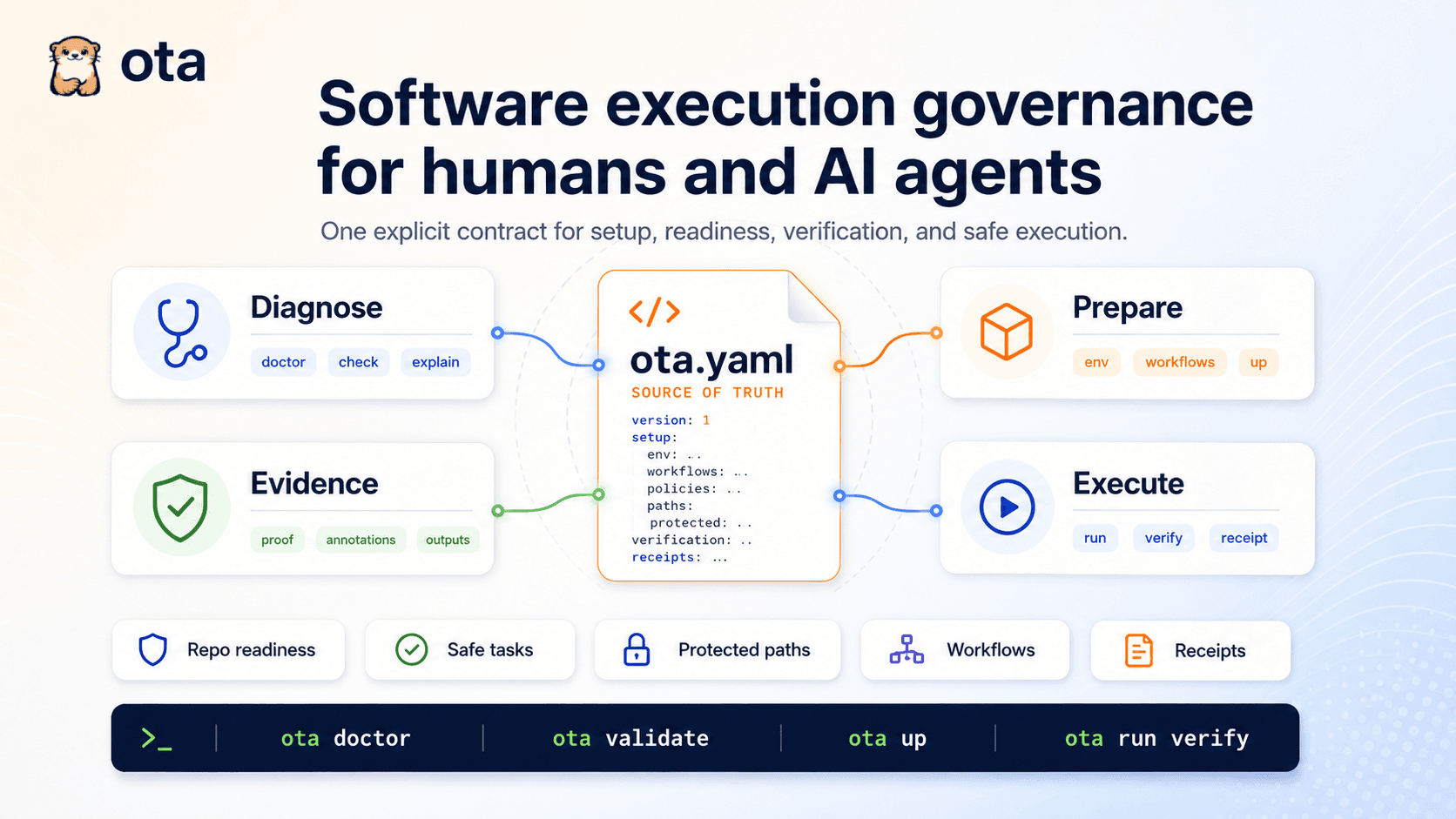
Ota helps developers make the first successful run of a repository explicit, repeatable, and easier to trust across local development, CI, automation, and AI-assisted workflows.
- Launched
- Clicks
- 10
- Categories
- Developer tools,Open source,Productivity
- Runs on
- Windows, macOS, Linux, CLI
- Pricing
- Free
About Ota
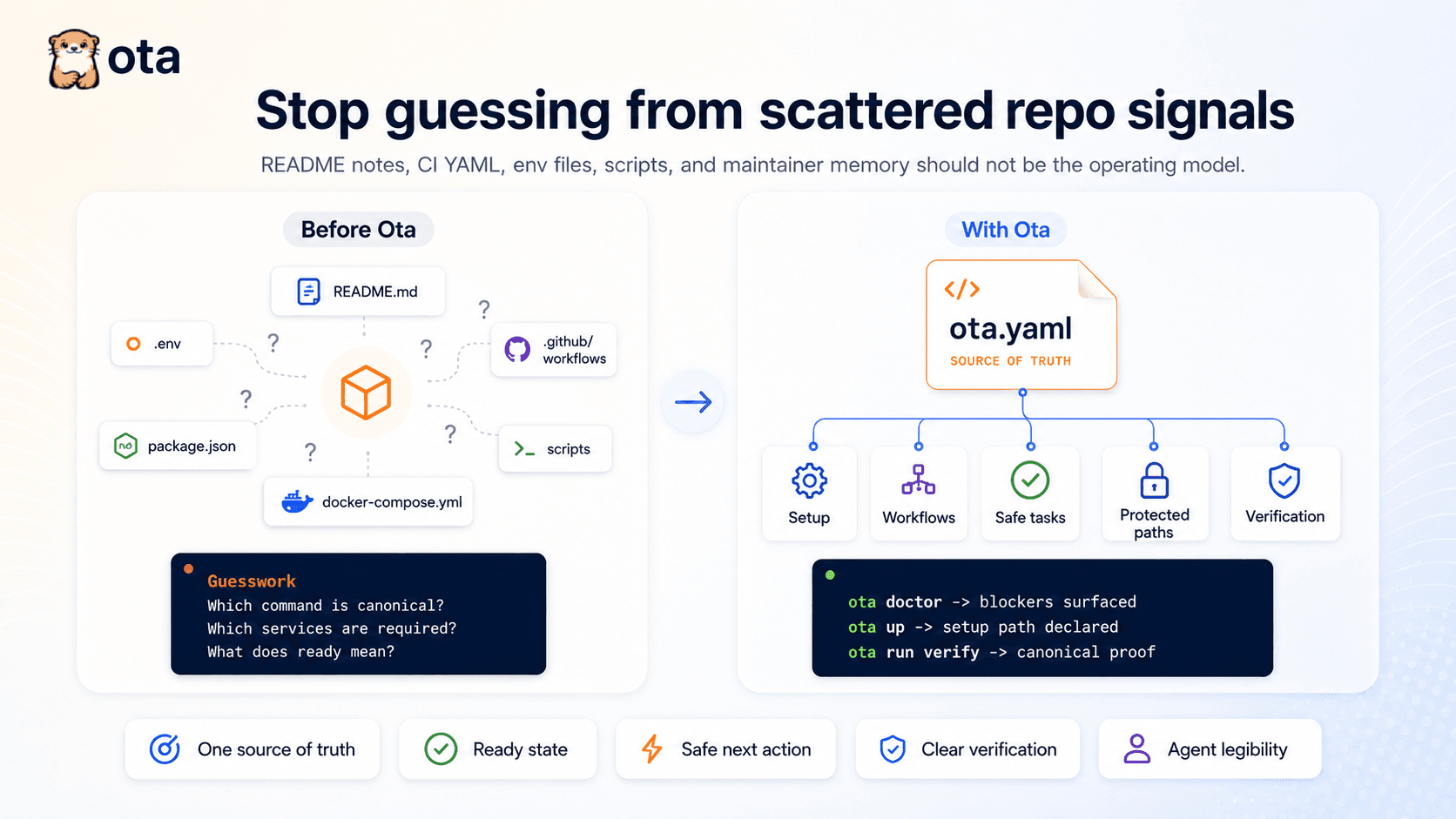
Most repos look complete until you actually try to use them. The real setup and runtime truth is often scattered across READMEs, scripts, CI config, environment files, Docker files, and tribal knowledge. That makes onboarding slower, setup drift harder to catch, and automation more brittle.
Ota solves this through a readiness contract, defined in `ota.yaml`, that describes what a repo needs in order to be runnable and operationally ready.
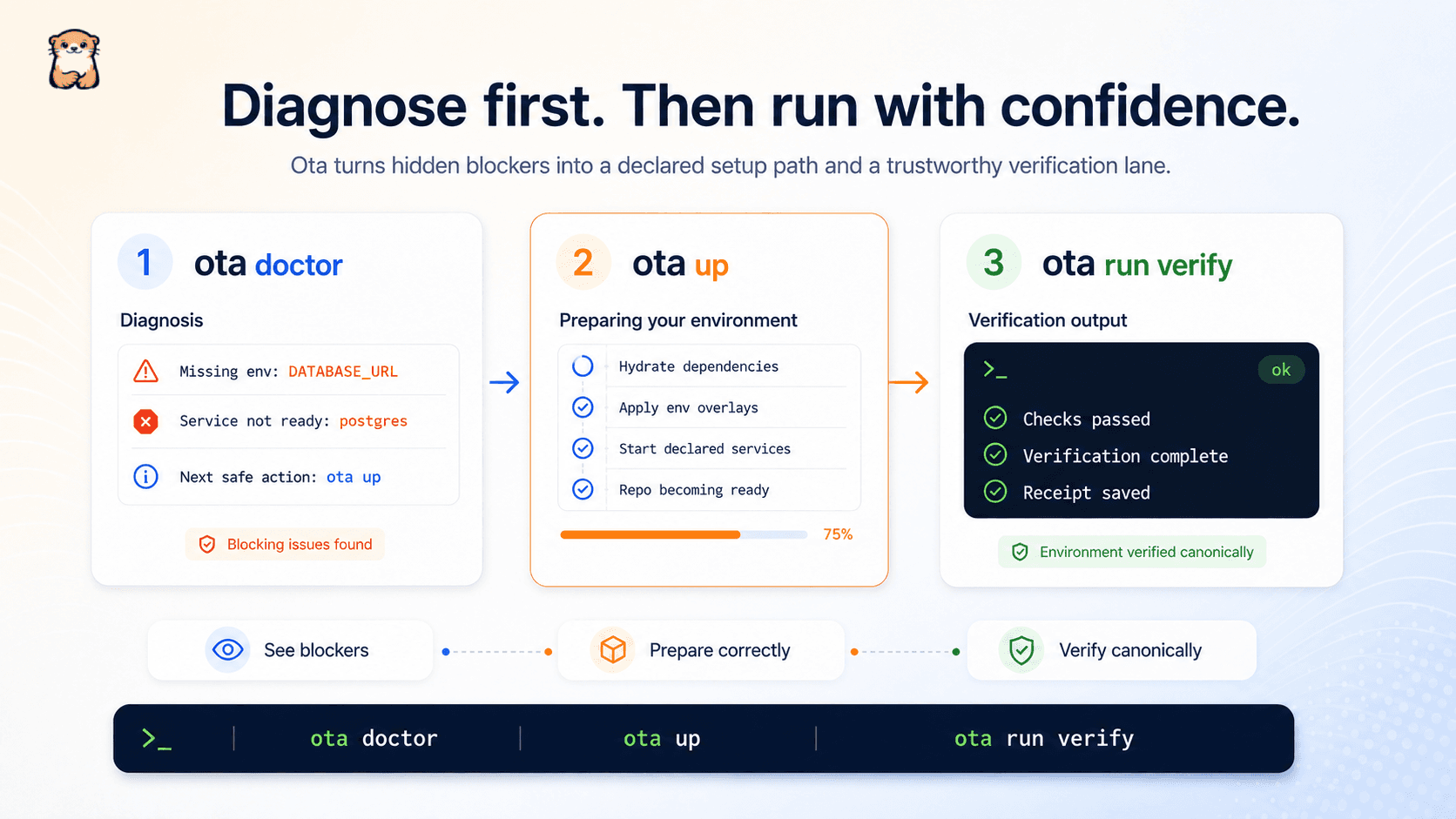
From that contract: - developers can diagnose blockers with `ota doctor` - validate the contract with `ota validate` - prepare the repo with `ota up` - and run declared tasks with `ota run <task>`.
Key features include:
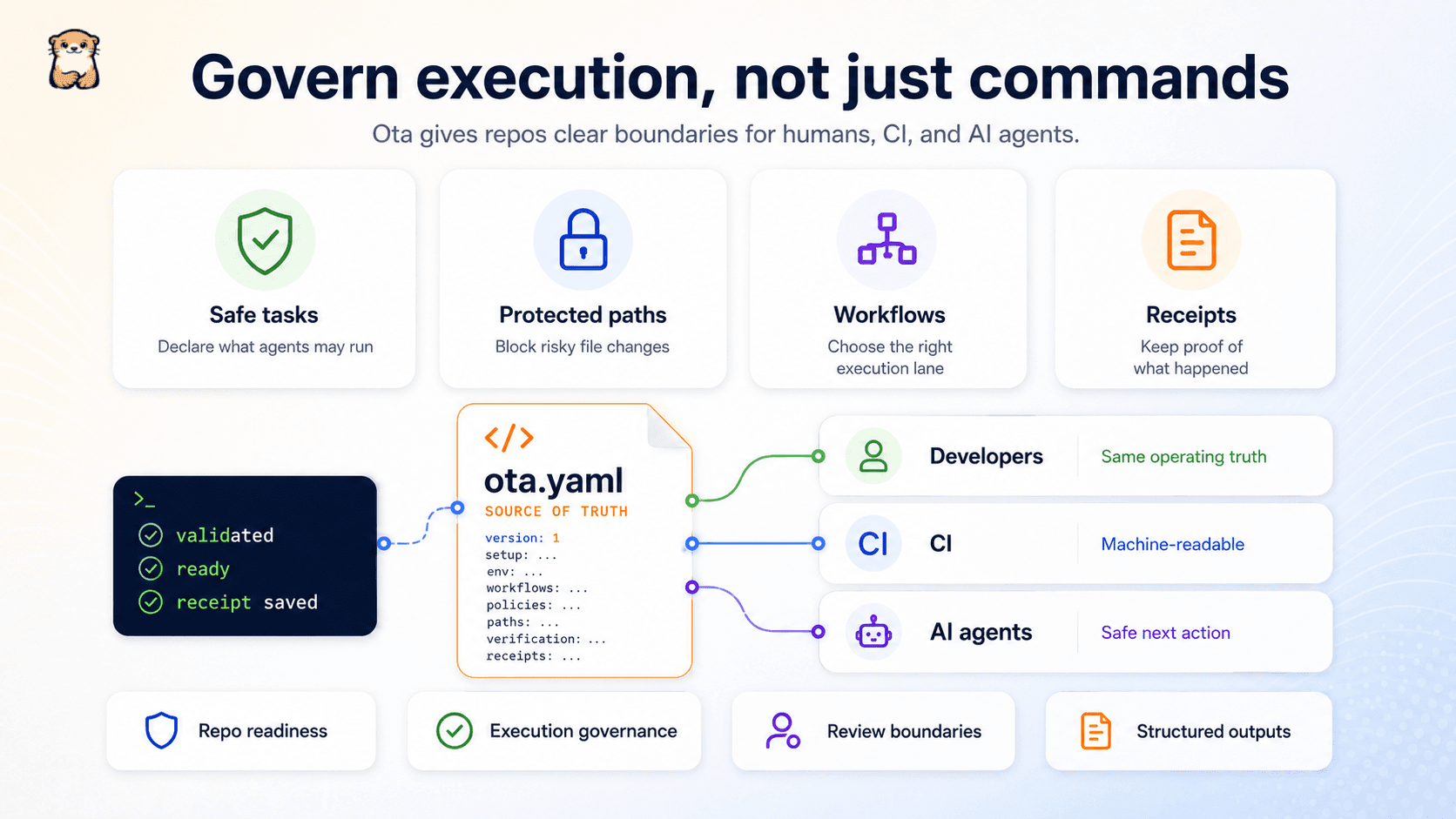
- readiness contracts - blocker detection - next-safe-action guidance - task execution - workflow-aware setup - local/container/remote execution support - CI-friendly validation - machine-readable JSON output - execution receipts - and support for humans and AI agents working from the same repo truth.
The outcome is simple: less setup guesswork, fewer repeated onboarding issues, clearer CI signals, safer automation, and a repo that can explain what it needs instead of leaving every new developer or agent to reverse-engineer it from scratch.
What Ota does that nothing else does
Ota gives repositories a machine-readable execution contract so humans, CI, and AI agents all know exactly how the repo should be prepared, verified, and run.
Who Ota is for
Ota is built for developers, maintainers, teams, and AI-assisted development workflows dealing with unfamiliar, inconsistent, or operationally unclear codebases.
Written up on SpacerrApps
Apps like Ota

Base202623 clicks
Search reviewed expert-video insights with creator attribution and original-source context.
Open source, Productivity, Developer tools

Calcul Heure8 clicks
Calcul heure de travail, heures supplémentaires et salaire en quelques secondes. Gratuit, sans inscription, 100% RGPD. Compatible Sage, Cegid, ADP, Silae.
Productivity, Open source, Utilities

Keymap1 clicks
Keymap is a macOS menubar app that shows every menu shortcut in the app you're using. Double-press ⌘ to summon the panel. Local and private.
Productivity, Utilities, Developer tools

Moonshot6 clicks
Record your screen, capture screenshots, and share by link. Turn recordings into AI summaries, action items, and bug reports for Linear and GitHub.
Developer tools, Productivity, Photo and video

Text Differ0 clicks
Free online tool to compare difference between two texts. Instantly check text similarity and changes line by line, word by word and char by char.
Productivity, Developer tools

Advertisement
- SpacerrXGrow on X and Monetize faster!
- Easy ScaleGet named when buyers ask AI which product to buy.
- Arb3a BalootThe Gulf Baloot card game, online
- This row is openYour app here, pinned above the list. Cancel whenever.


2 comments
Elias Wagner
How does Ota handle secrets and environment variables when running tasks locally, in CI, or on a remote machine?
Faith MbonuMaker
`ota.yaml` declares which secrets a task requires; it does not store them. Locally and in CI, Ota uses environment-provided values and keeps declared secrets out of receipts. Remote execution currently fails closed rather than exposing secrets through shell commands. Where does secret handling break when your tasks move between local, CI, and remote execution, and what should Ota guarantee?